Portable power stations have become one of the most popular pieces of outdoor equipment for campers, caravans, travellers, and homeowners looking for reliable backup power. However, one of the most common questions people ask is: what size power station do I actually need?
Choosing the right size depends on the devices you want to power, how long you plan to use them, and whether you'll have access to solar charging or other recharge options during your trip.
Understanding Power Station Capacity
Power station capacity is typically measured in watt-hours (Wh).
The higher the watt-hour rating, the more energy the unit can store and the longer it can power your devices.
As a general guide:
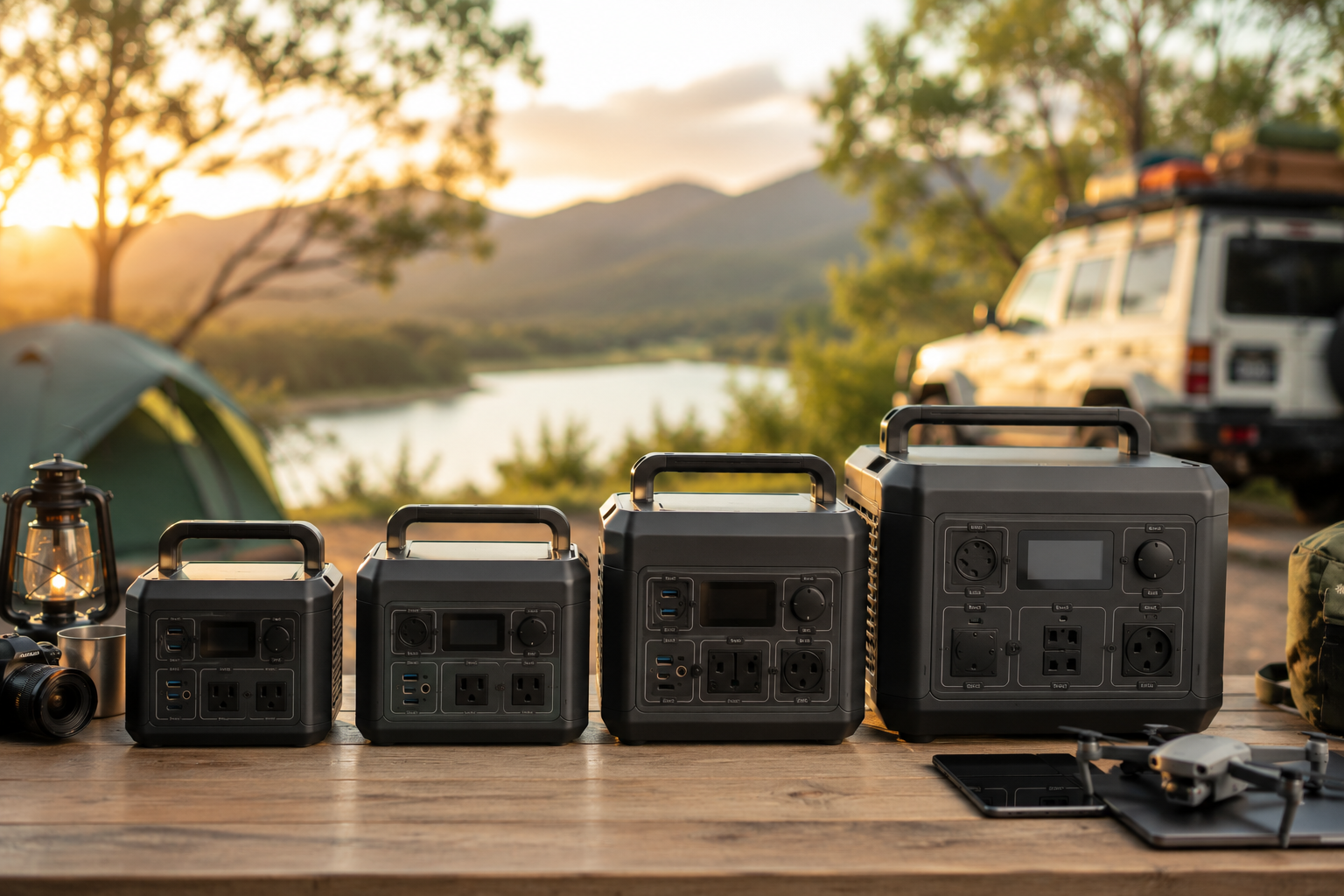
- 200–500Wh: Light use and short trips
- 500–1000Wh: Weekend camping and road trips
- 1000–2000Wh: Family camping and caravanning
- 2000Wh+: Extended off-grid adventures and home backup
Small Power Stations (200–500Wh)
A smaller portable power station is ideal if you mainly need to charge:
- Smartphones
- Tablets
- Cameras
- Drones
- Portable speakers
- LED lights
These units are lightweight, portable, and perfect for day trips, weekend camping, or emergency charging.
Medium Power Stations (500–1000Wh)
Medium-sized power stations offer significantly more flexibility.
They can comfortably power:
- Portable fridges
- Laptops
- Multiple phones
- Camping lights
- Small appliances
For many campers, this size offers the best balance between capacity, portability, and price.
Large Power Stations (1000–2000Wh)
Families, caravanners, and regular outdoor adventurers often benefit from larger power stations.
These models can support:
- Larger portable fridges
- CPAP machines
- Multiple devices simultaneously
- Portable fans
- Television screens
- Power tools
If you're planning longer trips or travelling with multiple people, this size range is often the most practical choice.
Extra Large Power Stations (2000Wh+)
For serious off-grid living, remote work setups, and emergency home backup, larger power stations provide maximum flexibility.
Depending on the model, they may power:
- Refrigerators
- Coffee machines
- Electric cooking appliances
- Power tools
- Multiple household devices
Many of these systems can also be expanded with additional battery packs and solar panels.
Consider Your Daily Power Usage
Before choosing a power station, think about what you'll be powering each day.
For example:
- Smartphone charging: 10–20Wh
- Laptop charging: 50–100Wh
- Portable fridge: 300–600Wh per day
- Camping lights: 20–50Wh per day
- CPAP machine: 300–800Wh per night
Adding up your expected usage will give you a much clearer idea of the capacity you'll need.
Solar Charging Can Make a Big Difference
If you'll be away for multiple days, solar charging can significantly extend your available power.
Many modern power stations are compatible with portable solar panels, allowing you to recharge throughout the day and reduce reliance on generators or mains power.
Australia's sunny climate makes solar charging an excellent option for campers and off-grid travellers.
Choosing the Right Size
As a simple rule:
- Solo campers → 300–500Wh
- Couples → 500–1000Wh
- Families → 1000–2000Wh
- Off-grid living or backup power → 2000Wh+
Selecting the right size from the beginning ensures you have enough power without carrying unnecessary weight or paying for capacity you won't use.
Final Thoughts
The best portable power station is the one that matches your lifestyle and energy requirements. Whether you're heading away for a weekend camping trip or preparing for extended off-grid adventures, choosing the right capacity will help keep your devices powered and your journey stress-free.
At Wild Grid, we offer a range of portable power solutions designed for Australian conditions, helping you stay powered wherever your next adventure takes you.